Dee Wagner, originator of Chi for Two, addresses each of the 5 points at the beginning of the 2026 Grossman et al. article Why the polyvagal theory is untenable.
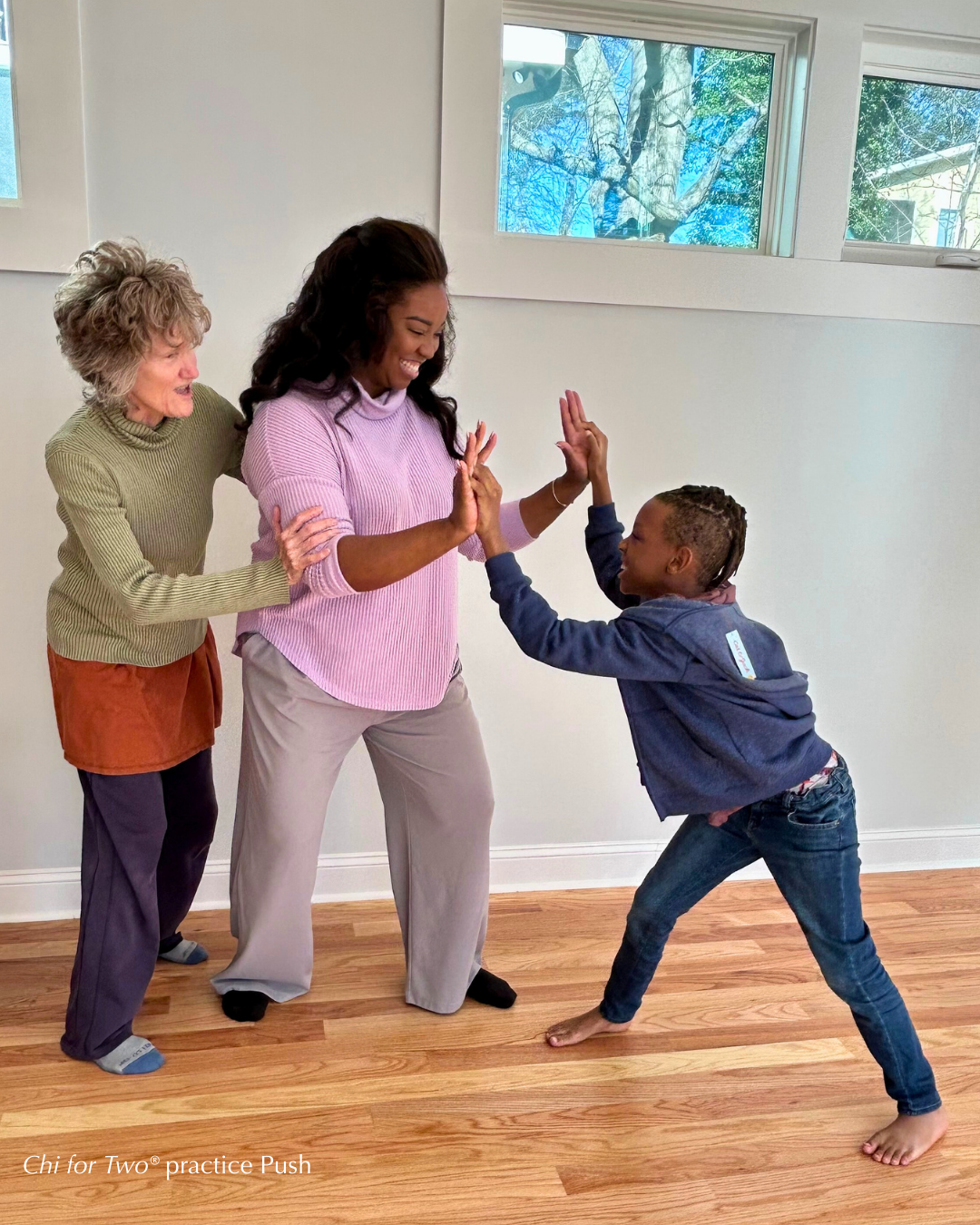
I feel moved to share my thoughts about the intensifying debate between Paul Grossman and Stephen Porges. Porges created polyvagal theory. Grossman has been expressing concern over the scientific accuracy of aspects of polyvagal theory since 2007. The 2026 Grossman et al. article claims polyvagal theory is "untenable."
As the intensifying debate focuses on heart rate measurement and evolution, I invite the possibility that resolution of the debate might come from a shift in focus to different aspects of vagal functioning.
I have spent years challenging Porges' idea that Play/Dance is a "hybrid" state, theorizing that the anatomy that supports Play/Dance offers unique mobilization, different from Fight/Flight. Our world could benefit from the conflict resolution this difference can make.
Grossman et al. article, published Feb 2026 - https://www.clinicalneuropsychiatry.org/download/why-the-polyvagal-theory-is-untenable-an-international-expert-evaluation-of-the-polyvagal-theory-and-commentary-upon-porges-s-w-2025-polyvagal-theory-current-status-clinical-applications-and/?ind=1770657406752&filename=10_Grossmanetal_Clinical26-1.pdf&wpdmdl=3418&refresh=698e802a8645f1770946602&utm_source=substack&utm_medium=email
Porges' statement to Grossman et al., published Feb 2026-https://www.clinicalneuropsychiatry.org/download/when-a-critique-becomes-untenable-a-scholarly-response-to-grossman-et-al-s-evaluation-of-polyvagal-theory/
Grossman et al. says polyvagal theory is untenable. Porges suggests the critique is untenable.
The word "untenable" means not able to be defended against objection, as a view or position. As Porges and Grossman et al. argue about heart rate variability as a measure of vagal functioning, could this be the time to focus on identifying the vagal functioning that facilitates mobilization with Play/Dance?
1)Direct Measure
Could focus on the heart be a red herring?
When we feel safe, the rhythm of the firing and refractory period of the myelinated vagus at the brainstem helps the pharynx coordinate breathing and swallowing. The coordination of breathing and swallowing affects jaw movement.
When we feel safe, the rhythm of the firing and refractory period of the mostly unmyelinated vagus in the gut helps the moving and the mixing of the content of the intestines. The moving and mixing of the content of the intestines affects the arm and leg movements that create gestures when we talk.
Nerves fire. The period between firing is called the refractory period. There is an absolute refractory period and a relative refractory period.
The relative refractory period can slow down the firing.
The relative refractory period of the vagus, like other nerves, is affected by things that are happening in the body.
The body is affected by two-person interactions:
When one person talks, another person's middle ear muscle might flex to tune into that person's voice.
When one person moves, the mirror neurons of a person watching that movement will pattern.
If the person watching can snap their head to the side—the beginning of the gesture No in many cultures—that will reduce the stimulation of mirror neurons firing while watching the movement of another person.
How might the relative refractory period of one person’s mostly unmyelinated vagus in the gut be affected by the percussive articulation of another person? Ideas such as this one, which grow out of polyvagal theory, seem worthy of study.
I am a long-time clinician with experience working with complex multi-generational trauma and the originator of a mindful embodiment method, not a research scientist. My hope is to draw focus to aspects of polyvagal theory worthy of further study before the scientific community tries to oust the entire theory.
For instance in the discussion of direct vagal measurement, it would be useful to note that studies of vagal functioning in humans are likely inconclusive or produce mixed results because there is no accounting for the two-person interactions that are part of each study.
Two-person interactions between study participants and those administering aspects of the study would likely affect the study participant's vagal functioning.
For example, if a study participant is lying down and someone administering aspects of the study is upright, that dynamic would likely affect the study. Two-person dynamics between study participants and administrators likely affect study participant's vagal functioning related to the moving and mixing of the content of the intestines and the coordination of breathing and swallowing.
This would be true for several possible reasons including the fact that the two-person dynamic of an upright person administering to a person lying down replicates infant/parent interactions that are key in patterning nervous system functioning.
Chi for Two offers awareness of two-person interactions that could help in accounting for the two-person interactions that occur during studies.
2)The Neuroanatomy and Functions of Two Major Brainstem Vagal Nuclei
The Chi for Two take on polyvagal theory focuses on the places in the body where the vagus' myelination is most different, the brainstem and the gut.
Focusing on the myelinated vagus at the brainstem and the mostly unmyelinated vagus in the gut helps us see how the relative refractory period of the vagus could be affected by two-person interactions thus affecting the rhythm of firing in each area of the body.
Brainstem: Is the rhythm of the vagus at the brainstem helping the pharynx coordinate breathing and swallowing including the swallowing of spit when we talk so we don't drool?
Gut: Has the relative refractory period slowed down the rhythm of firing in the mostly unmyelinated vagus in the gut, interfering with the moving and the mixing of the content of the intestines, and possibly inhibiting certain movements with certain people?
The Chi for Two take on polyvagal theory proposes that the relative refractory period slowing down the rhythm of firing in the mostly unmyelinated vagus in the gut inhibits certain movements during interactions with certain people. That is another idea that seems worthy of study.
3)Evolution of the Vagus
Many cultures have stories that describe life as coming out of the waters.
Bonnie Bainbridge Cohen, creator of Body-Mind Centering® and Andrea Olsen author of BodyStories say: We have all of evolution in our bodies.
We develop like radial creatures when oxygen and food come in the navel, like sharks when the spinal Galant reflex moves us down the birth canal with our two rows of teeth buds, like alligators if the spinal Galant reflex can crawl us skin to skin up the belly of the body we were formed within to smell our way to the breast to get breathing established through the nose before we try to suckle, like cats and dogs after we have squirmed in the swaddling arms of parents, aligning our limbs in our shoulders and hips claiming the forward Push of our arms and legs, which mammals like cats and dogs are born able to accomplish at birth.
Evolutionary ideas awaken big sensations in people likely because the topic stirs body memories from in utero, birth, and early childhood infant/parent dances that pattern nervous system functioning.
4)Specificity of Mammalian Social Behavior in Relation to Nonmammalian Vertebrates
When Wagner began discussing polyvagal theory with Porges in 2018, Wagner said, "The infant 'fighting' rhythms identified by child psychiatrist Kestenberg and colleagues will be very important in polyvagal theory."
Wild mammal mothers teach offspring different ways to use their claws (hooves) and jaws to help them play with littermates and to prevent them from eating each other. Nonmammalian animals are much less likely to do this kind of teaching of offspring.
Humans have lost awareness of this needed mammalian parenting due to the financial usefulness of war behavior, “dog-eat-dog” “kill the competition” kinds of behavior. Making littermates “the enemy” to create “dog-eat-dog” behavior requires a loss of intuitive knowledge of the existence of two types of mobilization, one for when we feel safe and another for situations of life-threatening danger.
The English word “mobilization” is defined in two ways. One definition draws from military ideas of moving troops. However, the other definition is “the action of making something capable of movement.”
Chi for Two brings an appreciation of the infant "fighting" rhythms to polyvagal theory. The most important part of polyvagal theory is the identification of an active state that is not Fight/Flight.
Chi for Two offers its own polyvagal theory of anatomical functioning. This theory brings focus to the difference between mobilization with the active state Porges called Play/Dance and mobilization with Fight/Flight. How cultures attend to the infant "fighting" rhythms affects whether oppositional moves become mobilized with Play/Dance or Fight/Flight in certain situations with certain people throughout the lifespan.
5)Interpretations of Earlier Seminal Physiological Literature
Polyvagal theory has invited a useful reinterpretation of two earlier seminal physiological ideas of nervous system functioning: "somatic movement" versus "autonomic movement," and the idea that sympathetic and parasympathetic provide one continuum. The Chi for Two take on polyvagal theory helps us see the accuracy of the reinterpretation ushered in by Porges’ polyvagal theory.
Somatic and Autonomic
We used to picture the peripheral nervous system divided into somatic movement, which is voluntary, and autonomic movement, which is involuntary. Now we see how the rhythm of the firing of the vagus at the brainstem and in the gut can affect whether a movement like reaching for a drink might be a somatic movement or an autonomic movement depending on the person and the situation.
When the movement of reaching for a drink is mobilized with the anatomical functioning that creates Play/Dance, the Reach is more likely to be able to be volitional. When that movement is mobilized with Fight/Flight, it is more likely to be involuntary. When a movement that used to be thought of as somatic and thus volitional, like reaching for a drink, is mobilized with Fight/Flight, that movement creates internal conflict: "Why do I keep reaching for that drink; I know it doesn't go well when I drink that drink?!"
Tennis coach Michael Allison differentiates between tennis played in the Play Zone versus Fight/Flight, but Allison has not pursued the anatomical difference. Porges has celebrated Wagner's work searching for the anatomical difference but has not yet recognized Play/Dance as a unique state of mobilization. Porges continues to use the word "mobilization" only for Fight/Flight.
Using the Chi for Two lens to see polyvagal theory, maybe studies can begin to explore the anatomy of mobilization with Play/Dance versus Fight/Flight. Chi for Two brings attention to vagal and striatal functioning.
The striatum channels random movement into goal-directed movement. Infant/parent interactions within various social systems determine if early infant goal-directed movement achieves its goal. Infant goal-directed movement achieving its goal could pattern mobilization with Play/Dance.
When movement does not become mobilized with Play/Dance and instead becomes mobilized with Fight/Flight, two-person therapeutic interactions can create symbolic redos of those early infant/parent interactions. Therapeutic two-person interactions can shift involuntary movement like reaching for a drink in certain situations with certain people into voluntary movement like being able to choose reaching for a drink or not.
Two Continuums
Porges’ polyvagal theory helped Wagner create a "Map" that shifts the old physiological paradigm of one continuum of active and calming, helping us picture two continuums of active and calming. Her "Map" is a tool in Miller and Beeson's The Neuroeducation Toolbox.
The seminal physiological thought that our sympathetic and parasympathetic systems provide one continuum of active and calming no longer serves humans. Technology and current economic systems are pushing all of us into trauma response.
The Chi for Two take on polyvagal theory pictures two continuums of active and calming:
When we sense safety, we mobilize with Play/Dance. Mobilization with Play/Dance provides a presence that allows the body to sense and respond to thirst, hunger, fullness, wish to rest, and mindfully consensual sexual sharing. Play/Dance naturally creates Rest and Digest, and Intimacy.
When we sense life-threatening danger, we mobilize with Fight/Flight. When we feel trapped, our bodies utilize the relative refractory period to slow down the rhythm of firing of the mostly unmyelinated vagus in the gut to inhibit certain moves in certain situations with certain people, creating patterns of dissociation. The inhibition of energy flow in the gut is how we die. When the relative refractory period slows the rhythm of firing of the vagus in the gut, mobilization requires Fight/Flight. There is the Fight/Flight feeling that questions, "Is it safe now?!" The reaction of others, particularly a parental person of authority, helps us sense whether we are indeed safe or not. Being able to snap the head to the side as part of the dance with that parental figure helps us feel safe. When we feel safe, we can work the Fight/Flight chemistry through the body so the rhythm of firing of the vagus in the gut can return to helping the mixing and the moving of the content of the intestines.
When we are born, we need a heart space with arms that can swaddle us in a responsive way that creates the resistance for infant arm and leg pushes that create the internal massage that works Fight/Flight chemistry through the body so we can mobilize with Play/Dance.